
Digital Coffee – How Technology is Changing the Way We Buy, Brew and Belong
In the quiet of a morning kitchen, a single tap on a phone screen starts the grinder. The kettle responds. A sensor in the machine recognises the dose, adjusts flow rate and temperature, and pushes a notification: Brew ready in 1:25 – enjoy your washed Castillo from Nariño. What once took intuition now runs on algorithms, and what once required presence is now orchestrated through data. This is not the future of coffee — it is its present.
Over the past decade, coffee has become one of the most quietly digitised sectors in the wider food and beverage world. Unlike the overt spectacle of delivery apps or fully automated kitchens, coffee’s technological transformation has happened largely through invisible systems — sensors, platforms, interfaces and embedded data. But its impact is far from subtle. From farm to café to home, digital technology is reshaping how coffee is bought, brewed, experienced and valued.
For consumers, the most visible aspect of this shift lies in the convenience and control offered by smart brewing. Machines connected to apps, grinders that learn from user habits, subscription platforms that adapt deliveries based on usage data — all these have shifted the role of the home user from passive recipient to informed participant. One no longer needs to be an expert to achieve precision. Knowledge is increasingly embedded in tools. The technology doesn’t just perform a task; it interprets a preference.
In cafés, digitalisation manifests in different ways. From cloud-based recipe libraries to tablet-based order tracking, from automated tamping to real-time telemetry on extraction parameters, technology now allows consistency at scale. Recipes can be locked across multiple locations. Flow rates, temperature fluctuations and grinder calibrations can be monitored remotely. Labour can be redirected from repetitive tasks to customer engagement. But with this comes new expectations — guests assume their experience will be flawless, their favourite drinks reproducible, their loyalty remembered.
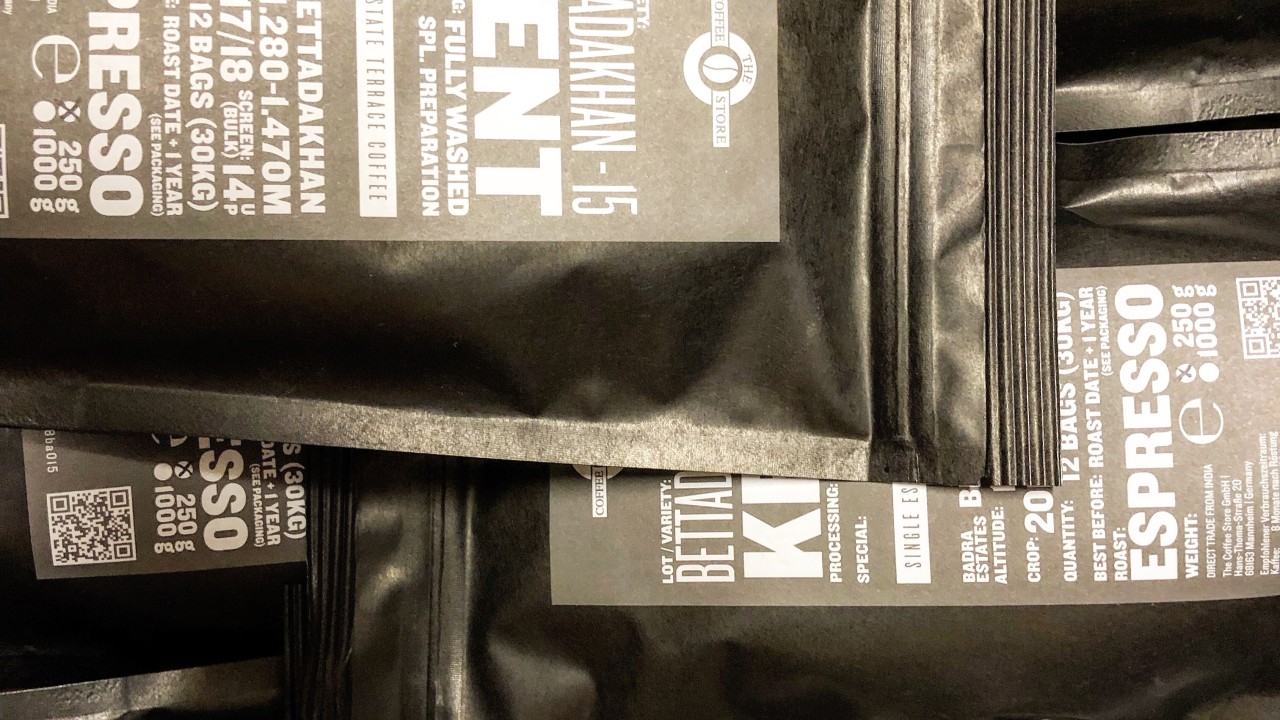
At origin, the digital turn is equally profound, though often underreported. Farm-level traceability platforms are becoming more common, allowing producers to register harvest volumes, drying curves, moisture data, and export tracking in real time. In some cases, QR codes scanned on a bag in Berlin now retrieve records entered from a hillside cooperative in Rwanda. This is not simply logistics. It is visibility — and, increasingly, power. Producers can prove consistency, demonstrate quality, and connect directly with buyers, bypassing opaque layers in the traditional supply chain.
Yet this transformation is not neutral. With digitalisation comes asymmetry. Those with access to infrastructure, connectivity and language fluency benefit more than those without. A smallholder farmer in a region with intermittent electricity may still rely on handwritten logbooks, while others build their own digital brands. This growing divide risks reinforcing inequality — even as it promises transparency.
What unites all actors in this shift is data — its collection, interpretation and use. Data is becoming the new currency of trust. Roasters analyse roast curves. Cafés track customer habits. Machines monitor usage patterns. Consumers log brew methods, cup scores, even mood correlations. Coffee has become measurable in ways it never was before. This quantification opens space for optimisation, personalisation — and, at times, obsession.
The risk here is reductionism. Not everything valuable in coffee can be measured. The sound of beans cracking in the roaster, the conversation between barista and guest, the feel of water passing through grounds — these are parts of the coffee ritual not easily codified. The challenge, then, is to use technology as an amplifier of meaning, not a replacement for it. The goal is not automation for its own sake, but augmentation of craft, connection and care.
This is where applied coffee science plays a vital role. Digital tools can only support meaningful decisions if those decisions are grounded in sensory, agronomic and process knowledge. A temperature reading means little without understanding solubility. A moisture chart is only useful when interpreted in the context of varietal, terroir and processing method. Data must be made intelligible — and relevant — through the lens of lived expertise.
At its best, digitalisation strengthens relationships: between farm and roastery, between café and customer, between the cup and the hand that holds it. But this requires intentional design. Technology must serve the chain, not dominate it. Interfaces must be inclusive. Platforms must be transparent. Ownership of data must be equitably negotiated.
The future of coffee will not be offline. Nor should it be. But it must remain human. As we navigate this digital turn, the question is not whether we use technology — but how, why, and for whom.
Coffee has always connected people. Now, it connects systems. The task before us is to ensure those connections remain meaningful — and fair.
Over the past decade, coffee has become one of the most quietly digitised sectors in the wider food and beverage world. Unlike the overt spectacle of delivery apps or fully automated kitchens, coffee’s technological transformation has happened largely through invisible systems — sensors, platforms, interfaces and embedded data. But its impact is far from subtle. From farm to café to home, digital technology is reshaping how coffee is bought, brewed, experienced and valued.
For consumers, the most visible aspect of this shift lies in the convenience and control offered by smart brewing. Machines connected to apps, grinders that learn from user habits, subscription platforms that adapt deliveries based on usage data — all these have shifted the role of the home user from passive recipient to informed participant. One no longer needs to be an expert to achieve precision. Knowledge is increasingly embedded in tools. The technology doesn’t just perform a task; it interprets a preference.
In cafés, digitalisation manifests in different ways. From cloud-based recipe libraries to tablet-based order tracking, from automated tamping to real-time telemetry on extraction parameters, technology now allows consistency at scale. Recipes can be locked across multiple locations. Flow rates, temperature fluctuations and grinder calibrations can be monitored remotely. Labour can be redirected from repetitive tasks to customer engagement. But with this comes new expectations — guests assume their experience will be flawless, their favourite drinks reproducible, their loyalty remembered.
At origin, the digital turn is equally profound, though often underreported. Farm-level traceability platforms are becoming more common, allowing producers to register harvest volumes, drying curves, moisture data, and export tracking in real time. In some cases, QR codes scanned on a bag in Berlin now retrieve records entered from a hillside cooperative in Rwanda. This is not simply logistics. It is visibility — and, increasingly, power. Producers can prove consistency, demonstrate quality, and connect directly with buyers, bypassing opaque layers in the traditional supply chain.
Yet this transformation is not neutral. With digitalisation comes asymmetry. Those with access to infrastructure, connectivity and language fluency benefit more than those without. A smallholder farmer in a region with intermittent electricity may still rely on handwritten logbooks, while others build their own digital brands. This growing divide risks reinforcing inequality — even as it promises transparency.
What unites all actors in this shift is data — its collection, interpretation and use. Data is becoming the new currency of trust. Roasters analyse roast curves. Cafés track customer habits. Machines monitor usage patterns. Consumers log brew methods, cup scores, even mood correlations. Coffee has become measurable in ways it never was before. This quantification opens space for optimisation, personalisation — and, at times, obsession.
The risk here is reductionism. Not everything valuable in coffee can be measured. The sound of beans cracking in the roaster, the conversation between barista and guest, the feel of water passing through grounds — these are parts of the coffee ritual not easily codified. The challenge, then, is to use technology as an amplifier of meaning, not a replacement for it. The goal is not automation for its own sake, but augmentation of craft, connection and care.
This is where applied coffee science plays a vital role. Digital tools can only support meaningful decisions if those decisions are grounded in sensory, agronomic and process knowledge. A temperature reading means little without understanding solubility. A moisture chart is only useful when interpreted in the context of varietal, terroir and processing method. Data must be made intelligible — and relevant — through the lens of lived expertise.
At its best, digitalisation strengthens relationships: between farm and roastery, between café and customer, between the cup and the hand that holds it. But this requires intentional design. Technology must serve the chain, not dominate it. Interfaces must be inclusive. Platforms must be transparent. Ownership of data must be equitably negotiated.
The future of coffee will not be offline. Nor should it be. But it must remain human. As we navigate this digital turn, the question is not whether we use technology — but how, why, and for whom.
Coffee has always connected people. Now, it connects systems. The task before us is to ensure those connections remain meaningful — and fair.
Author:
Dr. Steffen Schwarz